
Insights
- Notes on Wildlife Interpretation Design #1
Why Interpretive Signage Matters
- Gautam Dangi - Founder & Creative Director, Green Design
- 6 min read
A hornbill disappearing into the forest canopy, a spider waiting patiently in its web or a mangrove tree standing firm against the tides may seem like ordinary sights. Yet each is part of a fascinating story of survival, adaptation and connection. A walk through a forest, bird sanctuary, wetland or nature park can be an opportunity to uncover these hidden stories, understand ecological relationships and develop a deeper connection with the natural world.
The challenge is that nature does not always reveal its stories easily.
Most visitors may notice a bird, a tree, a butterfly or an animal, but they often miss the fascinating behaviours, relationships and ecological processes that make these species remarkable. Without interpretation, many of these stories remain hidden.
Traditionally, this role has been performed by nature educators and guides. A skilled guide can transform a simple walk into a memorable experience through stories, observations and insights. More than simply identifying species, they help visitors understand why a hornbill seals its nest, how mangroves survive in salty water or why a seemingly ordinary spider plays an important role in the ecosystem. Through storytelling and observation, they make nature meaningful.
However, the quality of such an experience depends largely on the individual guide. Their knowledge, communication skills, storytelling ability, enthusiasm and experience all influence what visitors take away from the visit.
As a result, the experience can sometimes be inconsistent. One visitor may leave deeply inspired while another may have a routine and forgettable experience.
In many places, nature guides may not always be available. At times, large visitor numbers can make personal interaction difficult. Even when excellent guides are present, not every visitor joins a guided walk.
This is where interpretive signage plays a vital role.
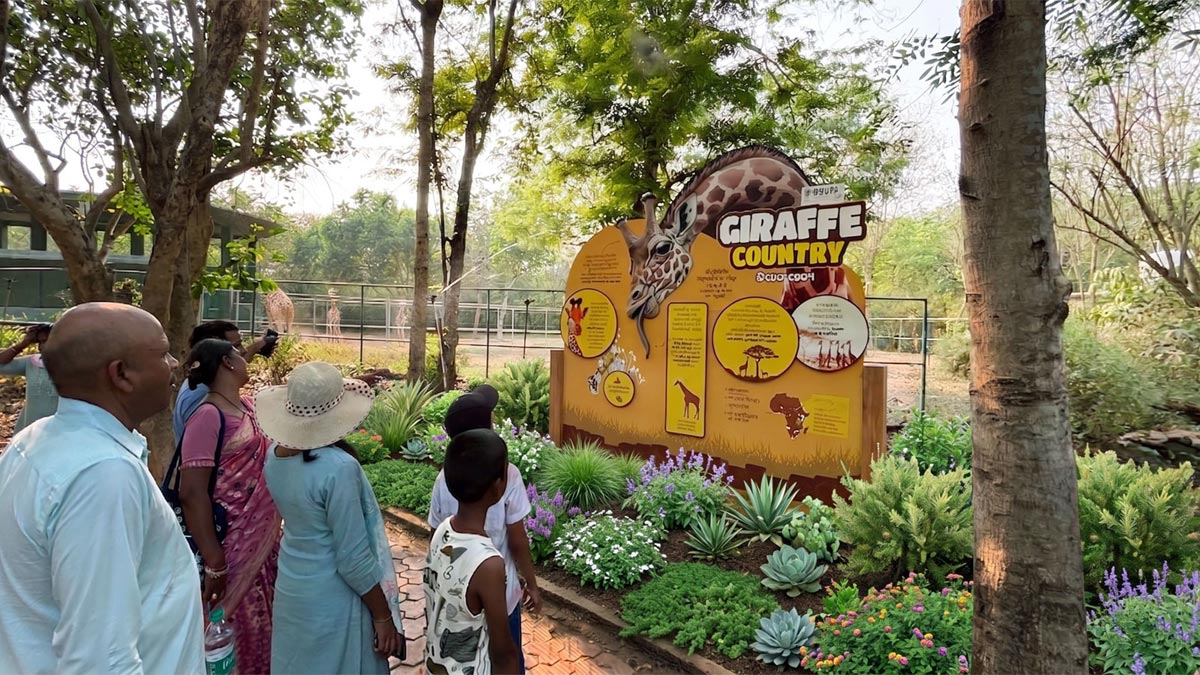
Well-designed interpretive signage acts as a silent educator, available to every visitor throughout the day and every day of the year. It ensures that important stories, scientific insights and conservation messages are communicated consistently whether a guide is present or not.
More importantly, good interpretive signage does not merely present information. It presents information in a way that captures attention, creates curiosity and encourages visitors to observe more closely. Through storytelling, illustrations, photographs and simple explanations, it helps people discover the hidden wonders of nature for themselves.
A visitor may walk past a large tree without giving it much thought. But after reading a sign that explains how that tree supports birds, insects, mammals, fungi and countless other organisms, the same tree suddenly becomes a living ecosystem. The visitor no longer sees a tree. They see an entire ecosystem at work.
This ability to change the way people see nature is one of the greatest strengths of interpretation.
What Makes Good Interpretive Signage?
Many people assume that interpretive signage is simply information displayed on a board. In reality, information and interpretation are not the same thing.
Information tells people what something is.
Interpretation helps people understand why it matters.
For example, a sign that states that a fig tree can grow more than 20 metres tall provides information. A sign that explains how a single fig tree can produce fruit at times when few other trees do, providing food for birds, mammals and countless other animals throughout the year, creates a far more engaging experience.
Facts are important, but facts alone rarely create lasting memories.
Good interpretation connects knowledge with emotion, curiosity and personal relevance. It encourages visitors to ask questions, observe more carefully and look at familiar things in new ways.
Effective interpretive signage often shares a few common characteristics:
It tells stories rather than presenting facts alone
Humans naturally respond to stories. A hornbill sealing its nest inside a tree cavity, a migratory bird travelling thousands of kilometres across continents or a dragonfly spending much of its life underwater before emerging into the air provides a narrative that people can follow and remember.
It provokes curiosity
The best signs leave visitors wanting to know more. They encourage people to look around, observe details and continue exploring.
It is easy to understand
Visitors come from different backgrounds and age groups. Scientific accuracy is essential, but the language should remain simple and easy to understand.
It encourages observation
Good signage directs attention back to nature. Instead of replacing the experience, it enhances it. Visitors spend less time reading and more time looking.
It is visually engaging
Visually descriptive illustrations, photographs and diagrams can communicate ideas instantly, often transcending language barriers. Combined with thoughtful design, they help make information accessible, engaging and memorable.
Perhaps most importantly, good interpretive signage respects the visitor’s mental space. It does not overwhelm people with information. Instead, it provides just enough context to unlock a deeper understanding of what they are seeing.
The goal is not to create experts.
The goal is to create curiosity.
Curiosity leads to discovery. Discovery leads to appreciation. Appreciation is often the first step towards conservation.
In that sense, interpretive signage is far more than information displayed on a board. It helps people notice, understand and connect with the natural world around them.
As Sir David Attenborough famously observed, “No one will protect what they don’t care about, and no one will care about what they have never experienced.” By helping visitors discover the stories hidden within nature, interpretation creates that experience of connection. Once people begin to see nature differently, they are more likely to value and protect it.
About the Author
Gautam Dangi is the Founder and Creative Director of Green Design, India’s leading wildlife interpretation design studio. Through projects across wildlife parks, bird sanctuaries, zoos, and nature destinations, he has helped enrich visitor experiences and foster deeper connections with nature. His vision is to connect visitors with nature and wildlife, inspiring them to appreciate and help protect the natural world.
Notes on Wildlife Interpretation Design is an ongoing series that explores the principles, practices and potential of interpretation in creating meaningful connections between people and nature.